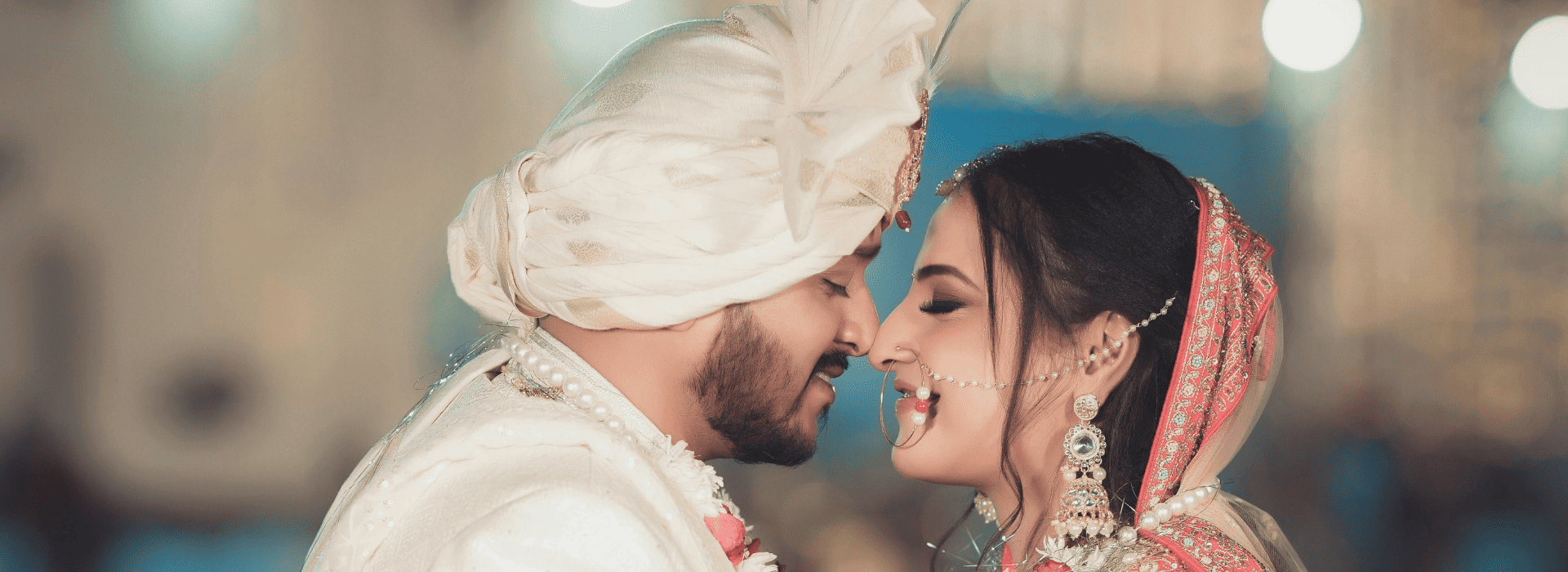
WHAT ARE THE TOP WEDDING TRENDS IN INDIA IN 2026?
India’s wedding industry in 2026 is defined by three big shifts: smaller but more expensive weddings (average budget now ₹39.5 lakh, up 8% from last year), a surge in destination and experiential celebrations, and the rise of eco-conscious, deeply personalised choices driven by Gen Z and Millennial couples.
Technology especially AI tools is also beginning to change how vendors operate and how couples plan. The industry is now valued at ₹6.5 lakh crore and growing at 20–25% annually.
Indian weddings have never been small affairs. But in 2026, something interesting is happening they are getting more expensive while also getting more intentional.
The average Indian couple is spending ₹39.5 lakh on their wedding, according to WedMeGood’s 5th Annual Wedding Industry Report an 8% jump from the previous year. But here is what the number does not tell you: couples are not spending more to invite more people. They are spending more to create better experiences for fewer guests.
That shift from scale to meaning is the thread running through every major trend in 2026. Whether you are a couple planning your wedding, or a vendor trying to understand where the market is going, this is what is actually happening in India’s ₹6.5 lakh crore wedding industry right now.
Trend 1: The Micro-Wedding is Now Mainstream
For years, the “big fat Indian wedding” was the default. In 2026, it is officially one option among many not the only one.
Couples, especially Millennials and Gen Z who are largely self-funding their weddings, are consciously choosing smaller guest lists and deeper experiences. Think 80–150 guests instead of 500, a boutique heritage property instead of a 1,000-capacity banquet hall, and a two-day celebration instead of a week-long affair.
This is not a budget compromise. Destination micro-weddings are averaging ₹58 lakh significantly higher than the overall average because the per-head investment goes up when the headcount goes down.
What this means for vendors:
Packages need to shift. A caterer offering only large banquet setups, or a decorator pricing only for 500-pax events, is missing a fast-growing segment. Boutique, curated, high-quality offerings are the play here.
What this means for couples:
A smaller wedding is not a lesser wedding. In 2026, it is often a more memorable one.
Trend 2: Destination Weddings Are No Longer a Luxury They’re a Category
One in four Indian weddings in 2025–26 is a destination wedding. That number, confirmed by the WedMeGood 2025 Annual Report, tells you everything about where the market is headed.
Rajasthan continues to dominate Udaipur, Jaipur, and Jodhpur remain the top three domestic destination choices. Newer destinations are breaking through too: Mussoorie, Rishikesh, Orchha, and Daman are seeing significant traction. Internationally, Thailand, UAE, and Italy remain the top three, accounting for 60% of Indian overseas destination weddings, with Istanbul rising rapidly.
The destination wedding market is growing at a CAGR of 15–16% and contributes roughly 20% of India’s total wedding industry revenue.
City-Wise Average Wedding Spend in 2025–26 (Source: WedMeGood)
| City | Average Wedding Budget |
|---|---|
| Jaipur | ₹73 lakh |
| Delhi | ₹38 lakh |
| Bangalore | ₹37 lakh |
| Hyderabad | ₹37 lakh |
| Mumbai | ₹35 lakh |
What this means for vendors:
If you are based in a destination city like Jaipur, Udaipur, or Goa your opportunity has never been larger. Local vendors in these markets have a real edge over outsiders, but only if they have strong digital visibility to be discovered by couples planning remotely.
Trend 3: Personalisation is the New Luxury
In 2026, the most impressive thing you can do at an Indian wedding is not hiring the most expensive decorator. It is making the wedding feel undeniably, recognisably yours.
Couples are commissioning custom illustrated invite cards featuring their love story. They are having dupattas embroidered with each other’s initials. They are building “nostalgia corners” with black-and-white photos of their parents’ weddings. They are writing their own vows. They are choosing wedding themes inspired by the cities where they first met.
According to Pinterest’s 2026 wedding trend forecast in collaboration with WeddingWire India, soft pink themes have seen a 473% search increase, sunflower haldi searches are up 62%, and dark olive green for decor has risen 58% all driven by couples moving away from one-size-fits-all wedding aesthetics.
What this means for vendors:
Vendors who customise invitation designers, decorators, caterers, makeup artists have a significant edge. Generic packages are being replaced by “tell us your story, we will build your wedding around it” positioning.
Trend 4: Sustainability is Now an Expectation, Not a PR Move
Over 50% of Indian couples in 2025–26 are actively making eco-conscious choices for their weddings. This is not a niche anymore it is mainstream behaviour.
What does this look like in practice?
• Biodegradable confetti replacing synthetic options
• Digital invitations replacing paper 54% of couples now prefer digital invites
• Locally sourced, seasonal flowers instead of imported blooms
• Bamboo, jute, and brass replacing plastic and synthetic decor
• Reusable mandap structures replacing one-time floral setups
• Zero-waste catering with compostable cutlery
• Green venue bookings solar-powered venues up 5% in metros
The “Eco-Luxe” aesthetic is leading this shift it is not about looking like you are saving the planet. It is about sustainability that is visually indistinguishable from, and often more beautiful than, traditional luxury.
What this means for vendors:
Decorators who offer a sustainable mandap, caterers using compostable serveware, and venues with green credentials are gaining a real competitive advantage. The demand is real and the supply is still catching up which means first movers win.
Trend 5: Wedding Budgets Are Rising and Couples Are Financing Them
Average wedding budgets in India rose 8% year-on-year to ₹39.5 lakh. But here is the number most people miss: the average wedding loan size is now ₹15.5 lakh. Around one-third of Indian families are financing part of their wedding through loans.
This is not a warning sign it reflects the emotional and social weight Indian families attach to weddings. But it does have implications for how vendors should approach pricing conversations. Couples taking loans are price-sensitive on the surface but experience-driven underneath. They are not looking to spend less they are looking to justify every rupee they spend.
What this means for vendors:
Transparent pricing with clear value articulation wins. Vendors who can explain why their service costs what it does, and what the experience gap looks like versus a cheaper alternative, will convert better than vendors who simply compete on price.
Trend 6: Photography and Videography Now Command Premium Budgets
Cinematic wedding films and premium photography packages priced between ₹3–15 lakh have emerged as one of the fastest-growing high-value segments in the industry. Photography and videography collectively account for 35.2% of overall wedding services industry revenue globally and India is following this curve closely.
Couples are booking photographers who offer full cinematic films, drone coverage, and pre-wedding shoots. The “film-like” wedding video is now a cultural artifact, not just documentation. The “Varmala Preservation” trend where the garland exchange is treated as a premium photographic event is also quietly rising.
What this means for photographers and videographers:
Packages bundling cinematic film, photography, and drone coverage are converting better than photo-only packages. Upgrading your reel to show cinematic quality footage is no longer optional if you want to capture the premium segment.
Trend 7: AI is Entering the Wedding Industry and Most Vendors Are Behind
Nearly 24% of Indian wedding vendors are now using AI tools in some form for photo and video editing, design moodboards, content drafting, and automated client communications. The other 76% are not.
This gap is significant. Vendors using AI for editing are turning around deliverables faster. Those using it for client communication are responding to inquiries quicker and losing fewer leads to competitors. WedMeGood launched an AI-powered planning chatbot called Wedika in late 2025, signalling that even discovery platforms are going AI-native.
On the couple side, 75% of Indian couples search for vendors online through apps and websites. 80% use social media to plan their wedding. The couple’s planning journey is almost entirely digital vendors with weak digital presence are invisible to this majority.
What this means for vendors:
You do not need to be a tech expert. But you need to be using AI for at least three things: editing speed, client follow-up, and content creation. The vendors who adopt early will appear faster, communicate better, and convert more inquiries.
Trend 8: Bridal Fashion is Diversifying Red is No Longer the Only Choice
The traditional red bridal lehenga is not going away. But in 2026, it is sharing the stage with a much wider palette. Dusty rose sarees are up 114% in Pinterest searches. Pastel lehengas in champagne, sage, and powder pink are gaining ground. Emerald green and midnight blue are being adopted for ceremonies. Corset blouses are in strong revival. Velvet fabric is returning with metallic threads and sequin detailing.
For grooms, layered styling bandhgalas, achkans, textured jackets is replacing the single sherwani template. Handloom fabrics are a dominant thread across all bridal fashion, as couples seek craft they can feel.
In jewellery, the lab-grown diamond shift is significant. 45% of brides are now choosing lab-grown diamonds for engagement rings a number that has grown sharply in two years and continues to rise.
What this means for bridal wear and jewellery vendors:
Couples want to see range. If your portfolio shows only red lehengas and heavy polki, you are invisible to a significant portion of your target audience. Updating your portfolio to reflect diverse colour options and lab-grown alternatives is now essential.
Trend 9: Grand Entrances and Entertainment Are Getting Bigger
While the guest list is getting smaller, the spectacle within those smaller weddings is getting bigger. Wedding planners report that grand entrances with SFX, choreographed dance performances, horse-drawn carriages, fog machines, and even hot air balloons are becoming standard expectations at premium weddings.
Bridal baraats traditionally a groom’s domain are now a rising phenomenon. Brides are arriving with their own choreographed entries. Wedding entertainment budgets are rising, and DJs, choreographers, and entertainment vendors are benefiting.
But there is a catch: couples are simultaneously becoming more selective. They want entertainment that fits the aesthetic of their wedding not generic DJ setups or off-the-shelf performances.
What this means for entertainment vendors:
Customisation is the selling point. A choreographer who builds custom routines to the couple’s specific song selections will always beat one offering a standard Bollywood medley.
Trend 10: Trust and Reviews Now Drive Every Vendor Decision
One in three Indian couples checks online reviews before booking any wedding vendor. This single data point from WedMeGood’s 2025 report should inform everything a vendor does with their online presence.
The typical couple’s discovery journey in 2026 looks like this: Instagram for inspiration → Google or wedding platform for shortlisting → Reviews for final decision → WhatsApp for inquiry. Every step needs to be optimised. Vendors with strong visual portfolios but zero reviews are losing bookings at the final decision stage.
More than 40% of couples use a combination of offline recommendations, wedding apps, and social media to make vendor decisions. No single channel wins alone which means vendors absent from any one of these touchpoints are ceding ground to competitors who are not.
Frequently Asked Questions Indian Wedding Trends 2026
What is the average wedding budget in India in 2026?
According to WedMeGood’s 5th Annual Wedding Industry Report, the average Indian wedding budget in 2025–26 is ₹39.5 lakh up 8% from the previous year. Destination weddings average ₹58 lakh. Jaipur has the highest city average at ₹73 lakh, followed by Delhi at ₹38 lakh.
Are destination weddings popular in India in 2026?
Yes. One in four Indian weddings in 2025–26 is now a destination wedding. Rajasthan, Goa, and Kerala lead domestically. Internationally, Thailand, UAE, and Italy are the top three. The destination wedding segment is growing at 15–16% annually and contributes 20% of the total Indian wedding industry revenue.
What are the biggest wedding decor trends in India in 2026?
The biggest trends are Eco-Luxe (sustainable materials with luxury aesthetics), monochromatic and pastel colour palettes, Gardencore (floral and nature-inspired installations), traditional brass and copper elements, and personalised nostalgia corners featuring family heritage photos. Garden themes are up 22% and sunflower haldi bookings up 62% on Pinterest.
Is sustainable wedding planning a real trend in India or just hype?
It is very real. Over 50% of Indian couples are now actively making eco-conscious choices. Digital invitations are preferred by 54% of couples. Demand for biodegradable decor, compostable catering setups, and locally sourced flowers is rising sharply across all major cities.
What colours are trending for Indian weddings in 2026?
Dusty rose, sage green, champagne, lavender, and soft blush are trending for daytime and reception looks. Deep plum, emerald green, and midnight blue remain popular for ceremonies. Soft pink themes have seen a 473% Pinterest search increase, and dusty rose sarees are up 114%.
Are micro-weddings growing in India?
Yes. While they are not replacing big weddings, micro-weddings with under 150 guests are now a mainstream choice especially among self-funded couples and those choosing destination formats. The average spend per guest is significantly higher at these events because the saved headcount budget goes into experience upgrades.
What percentage of Indian wedding vendors are using AI in 2026?
About 24% of Indian wedding vendors are currently using AI tools for photo and video editing, design moodboards, content drafting, and automated client responses, according to WedMeGood’s 2025 report. Adoption is expected to accelerate significantly through 2026.
What do Indian couples value most when booking a wedding vendor in 2026?
Reviews and referrals are the top trust signals 1 in 3 couples checks reviews before booking. Instagram presence is the second biggest discovery channel. Pricing transparency and fast response time to inquiries are also critical conversion factors. 75% of couples search for vendors online through apps and websites.
How big is India’s wedding industry in 2026?
India’s wedding industry is valued at approximately ₹6.5 lakh crore (roughly $130 billion) and is growing at 20–25% annually. India hosts close to 10 million weddings every year, making it the second largest wedding market in the world after the United States. The industry is projected to approach ₹15 lakh crore by 2028.
Planning Your Wedding in 2026? Start with the Right Vendors
The Indian wedding of 2026 is not about impressing a crowd. It is about creating something that feels genuinely yours personal, intentional, and worth every rupee.
Finding the right vendors is the first step. ShaadiLuv is India’s wedding vendor discovery platform with verified listings, real reviews, and direct vendor contact across 20 Indian cities.
One thought on “Wedding Industry Trends in India 2026 What Couples and Vendors Need to Know”
Rahul Sharma
6 months agoGreat Info, Thanks